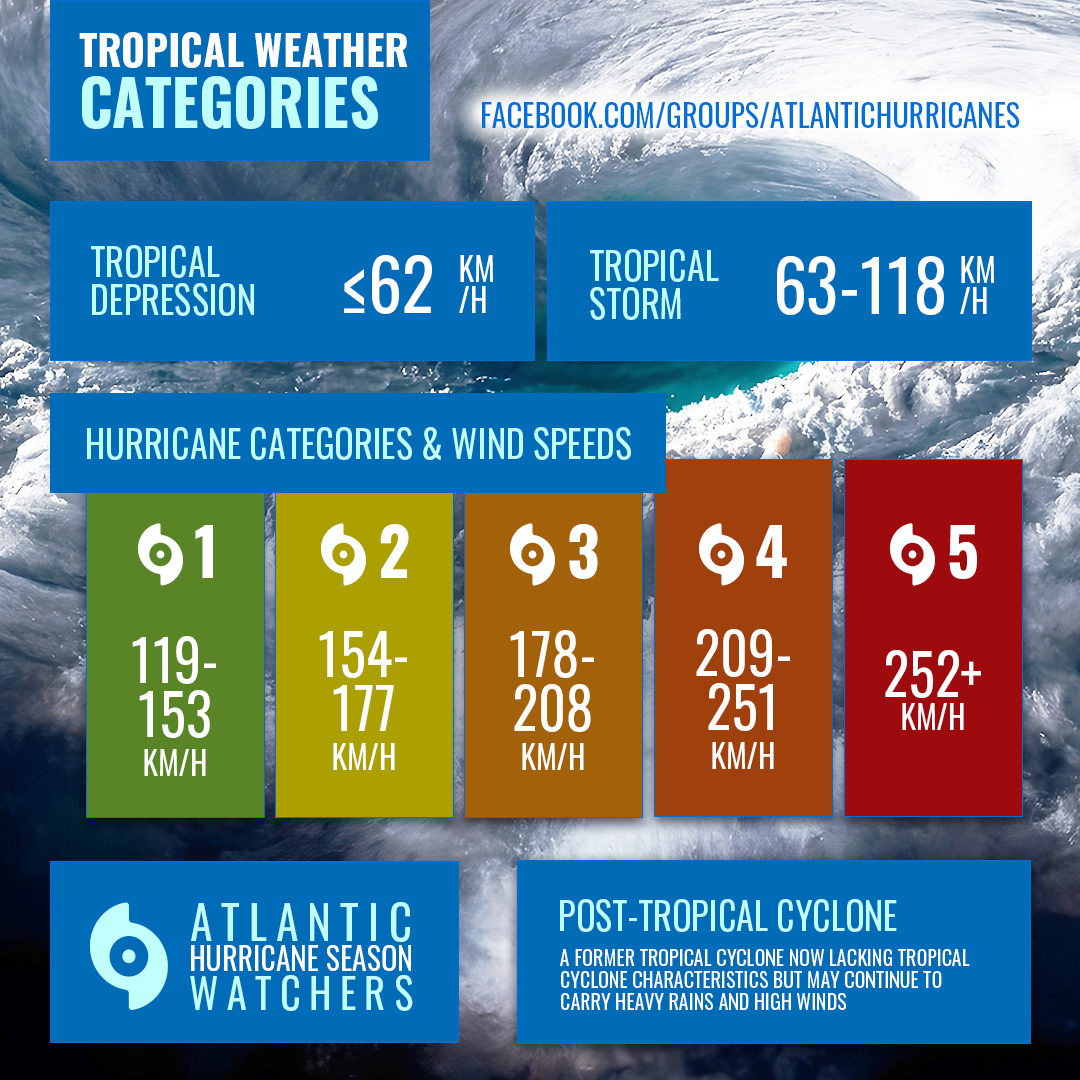
The Saffir-Simpson Hurricane Wind Scale is a widely recognized system used to classify tropical cyclones based on their sustained wind speeds. Developed in the early 1970s by engineer Herbert Saffir and meteorologist Robert Simpson, this scale helps convey the potential destructive power of a hurricane. The scale ranges from tropical depressions and storms to hurricanes of varying categories, including major hurricanes. Here’s a detailed breakdown of each category, from tropical depressions to post-tropical depressions.
A tropical depression is the weakest form of a tropical cyclone. It forms when a low-pressure area over warm ocean waters begins to organize into a cyclonic structure, with a defined circulation but relatively weak wind speeds. To be classified as a tropical depression, the system must have sustained winds of less than 39 mph (63 km/h). While tropical depressions are not as destructive as stronger cyclones, they can still bring heavy rainfall, leading to flooding and other hazards, especially in vulnerable areas.
When a tropical depression intensifies and its sustained winds reach between 39 mph (63 km/h) and 73 mph (118 km/h), it is classified as a tropical storm. At this stage, the system usually develops a more defined structure, often with a discernible center of circulation and more organized storm bands. Tropical storms can cause significant damage, particularly through heavy rainfall, flooding, and strong winds. These storms can disrupt power and transportation networks and pose a threat to life and property, especially in coastal areas.
A tropical storm becomes a hurricane when its sustained wind speeds exceed 74 mph (119 km/h). Hurricanes are further classified into categories based on their wind speeds, with Categories One and Two representing the lower end of the spectrum.
Major hurricanes are classified as Category Three or higher on the Saffir-Simpson Scale. These storms are capable of causing devastating or catastrophic damage and pose significant risks to life and property.
A post-tropical depression occurs when a tropical cyclone loses its tropical characteristics, usually as it moves over cooler waters or interacts with land. While the storm may no longer have the warm core and organized structure of a tropical cyclone, it can still bring significant weather, including heavy rainfall and strong winds. Post-tropical depressions can cause damage similar to weaker tropical storms, particularly if they interact with other weather systems or are slow-moving.
This scale provides crucial information that helps communities prepare for the potential impacts of tropical cyclones, emphasizing the importance of understanding and respecting the power of these natural phenomena.
